Big Benefits of Small Assisted Living Homes for Daily Elderly Care
Business Name: BeeHive Homes of Mesquite
Address: 780 2nd S St, Mesquite, NV 89027
Phone: (702) 381-6899
BeeHive Homes of Mesquite
At BeeHive Homes of Mesquite, Nevada, we offer the finest assisted living experience available in a cozy, comfortable homelike setting. Each of our residents has their own spacious room with an ADA approved bathroom and shower. We prepare and serve delicious home-cooked meals three times a day every day. We maintain a small, friendly elderly care community. We provide regular activities that our residents find fun and contribute to their health and well-being. Our staff is attentive and caring and provides assistance with daily activities to our senior living residents in a loving and respectful manner. We would like to invite you to tour and experience our assisted living home and feel the difference.
780 2nd S St, Mesquite, NV 89027
Business Hours
Families looking for senior care typically picture long hallways, large dining-room, and a calendar of activities pinned to a bulletin board system. That explains numerous standard assisted living communities. They have their strengths, but they are not the only design. Over the past years, small assisted living homes, often called residential care homes or board and care homes, have actually become an important option for everyday elderly care.
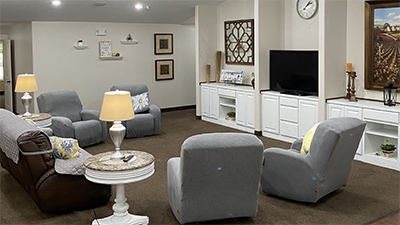
I have strolled into big, wonderfully embellished buildings where a resident might go a whole morning without speaking with the same staff member twice. I have actually also sat in the kitchen of a six‑bed home where the caregiver knew exactly how one resident liked her tea and which jokes would make another roll his eyes. Both can offer good assisted living, yet the everyday experience is very different.
This short article looks closely at why these smaller homes can work so well for day‑to‑day elderly care, what trade‑offs they bring, and how families can evaluate whether this design fits their situation.
What "small assisted living homes" really are
Terminology varies a lot by state. A small assisted living home might be accredited as a residential care home, personal care home, board and care home, or comparable label. Below the regulatory language, the concept is basic: a house‑sized setting where a small number of older adults get support with everyday living.

Typical functions include private or semi‑private bed rooms, shared living and dining locations, and 24‑hour staffing. Licensing guidelines cover staffing ratios, medication management, security functions, and training requirements. In numerous areas, these homes are topped at 4 to 16 citizens, though specific numbers depend on local law and zoning.
Families sometimes stress that "home" equals "uncontrolled" or "informal." That is not the case for reputable suppliers. They generally follow the very same assisted living guidelines as larger communities, however they use them in a residential rather than institutional setting. Asking direct questions about licensing, evaluations, and staff training rapidly reveals who takes compliance seriously.
The day-to-day rhythm: where small homes shine
When individuals relocate to assisted living, what shapes their lifestyle is not the brochure. It is the day-to-day rhythm: who assists them out of bed, how typically someone checks if they are hungry or restless, whether personnel have enough time to notice a modification in state of mind or mobility.
In smaller homes, that rhythm tends to feel more like extended family life. Staff spend more minutes per resident merely due to the fact that there are fewer homeowners competing for attention. A caregiver who helps with the morning regimen might be the very same individual who sits down throughout a quiet afternoon to see a preferred program, and later assists get ready for bed. Familiarity constructs quickly.
I when worked with a gentleman who moved from a big assisted living to a six‑resident home after a stroke. In the huge building, timers governed the schedule. Showers had actually fixed days. Meals served on the dot. Activities printed weeks ahead. That predictability helped some citizens, however he felt rushed and typically skipped group programs. In the smaller home, his day shifted. Breakfast ended up being "whenever he roamed into the kitchen between 7 and 9." The caregiver would greet him with, "Toast day or oatmeal day?" That easy choice, at his own speed, did as much for his sense of dignity as any official care plan.
Caregivers in small homes also tend to see the complete arc of a resident's day. If somebody is abnormally sleepy, has less hunger, or goes to the bathroom 3 times more than typical, it stands out. In larger structures, those pieces of details may be spread amongst numerous team member and different departments. In a home with 8 locals, the overnight assistant can easily tell the early morning shift, "Mrs. J was up more than normal, watch on her," and know she will be heard.
None of this implies big assisted living can not use warm daily care. Many do. The point is that small scale ensures quality habits more natural and automatic.
Personalization that really sticks
Every assisted living community speak about "personalized care." The distinction in small homes is how typically care plans really associate everyday practice.
Personalization in a small residential home generally appears in small, unglamorous details. Which side of the bed someone chooses to exit from. Whether they like to transfer utilizing a particular chair arm rather than a walker. How much triggering they need to keep in mind their hearing aids. In a home with 6 or 8 locals, staff can keep in mind these preferences without flipping through a binder.
Families typically inform me they are pleased when, within the very first week, staff in a small home call their parent by a label just relatives typically utilize. Not because they pulled it from a chart, but because there has been time to talk, reminisce, and listen. Those discussions are not "additional." They are the medium through which good elderly care happens.
This level of familiarity specifically benefits residents with dementia. A baffled person fares much better when the faces around them are consistent and the regimens versatile enough to adapt to that individual's mood. In a smaller setting, a resident having a rough early morning can remain in pajamas a bit longer, eat breakfast in the living room instead of the table, or rate the exact same hallway without feeling exposed in front of lots of others.
Personalization likewise reaches cultural and religious practices. I have actually seen small homes change weekly menus around one resident's long‑held senior care Friday fish custom, or silently organize transport for a month-to-month praise service due to the fact that they understood how deeply it mattered. In a big building, even when staff care, the large size can bury such gestures under work and schedules.
Social life on a human scale
Families typically presume that bigger structures indicate better social life. More residents, more possible buddies. In some cases that is true, particularly for very extroverted seniors who thrive on a packed calendar. However, numerous older grownups do not necessarily desire 10 choices a day. They want two or 3 meaningful contacts that feel natural, not forced.
In a small assisted living home, social interaction tends to happen in much shorter, more regular bursts. A resident strolling through the open kitchen will inevitably talk with whoever is cooking. Somebody reading in the living-room might spontaneously sign up with a puzzle another resident has begun. Staff can easily notice who invests too much time alone and delicately loop them into discussion without making it an official "activity."
For individuals who have grown more private with age or who fatigue easily, this softer social fabric can be less frightening than large, structured occasions. One retired engineer I worked with utilized to avoid most scheduled activities in his previous huge community. In the small home he relocated to later on, his social life slowly rebuilt through easy regimens: checking the mail with another resident, listening to baseball on the radio with a caregiver who was an authentic fan, feeding your home feline together. None of that appeared on an activities calendar, yet it mattered.
Of course, there are trade‑offs. Small homes hardly ever have on‑site gyms, theaters, or extensive clubs. Lots of partner with recreation center, checking out musicians, and volunteers to use range, but the scale is different. Households must consider their loved one's social style. An extremely gregarious person who loves huge crowds and occasions may discover a small home quiet after a while. Others discover that the calmer environment decreases anxiety and makes social interaction feel more manageable.
Staffing, oversight, and genuine accountability
One of the greatest advantages of a small setting is how noticeable whatever is. Locals, staff, and management share the very same area. There is less space, literally and figuratively, for problems to hide.
From a staffing viewpoint, ratios typically favor the resident. In a normal residential care home, you may see one caretaker for every 3 to 6 homeowners during the day, and a single awake or sleep‑over personnel individual at night, sometimes with an on‑call backup. In a big assisted living, the ratio can be higher, specifically overnight, where one or two assistants might cover dozens of homeowners spread across numerous wings.
More important than raw numbers is continuity. In small homes, the exact same staff typically work consistent shifts for the same group of citizens. That stability constructs deep knowledge. It also makes turnover more obvious. If a cherished assistant disappears and brand-new faces appear constantly, families observe rapidly and can ask why.
Owners or administrators of small homes tend to be really present. Lots of live close-by or even on website. I have seen owners personally drive homeowners to expert appointments, attend care conferences, or help fix behavior modifications due to the fact that they truly know the person. When something goes wrong, such as a fall or medication error, there are less layers between the cutting edge and decision makers. Course corrections can be faster.
Oversight is not ideal in any setting. A small home can be run poorly, just as a big building can. Families should always ask about evaluation histories, grievance records, and personnel training. Yet in a small setting, ongoing household participation is generally more practical. Dropping in unannounced, sharing a meal, or sitting quietly in the living-room for an hour reveals a lot. You see how personnel speak with residents, how quickly calls for assistance are answered, and whether the environment feels calm or frantic.
Practical distinctions in day-to-day care
To comprehend whether a small assisted living home will serve your family well, it helps to envision the day from waking to bedtime. Several patterns tend to differ from bigger settings.
Mornings typically stagger naturally. Instead of dozens of people trying to shower, dress, and line up for breakfast at a fixed time, citizens in small homes wake according to their own rhythms, within reason. Caregivers are not racing a group dining schedule, so they can permit a bit more time for sluggish movers or nervous bathers. A resident who has actually never been an early morning person does not need to suddenly become one.
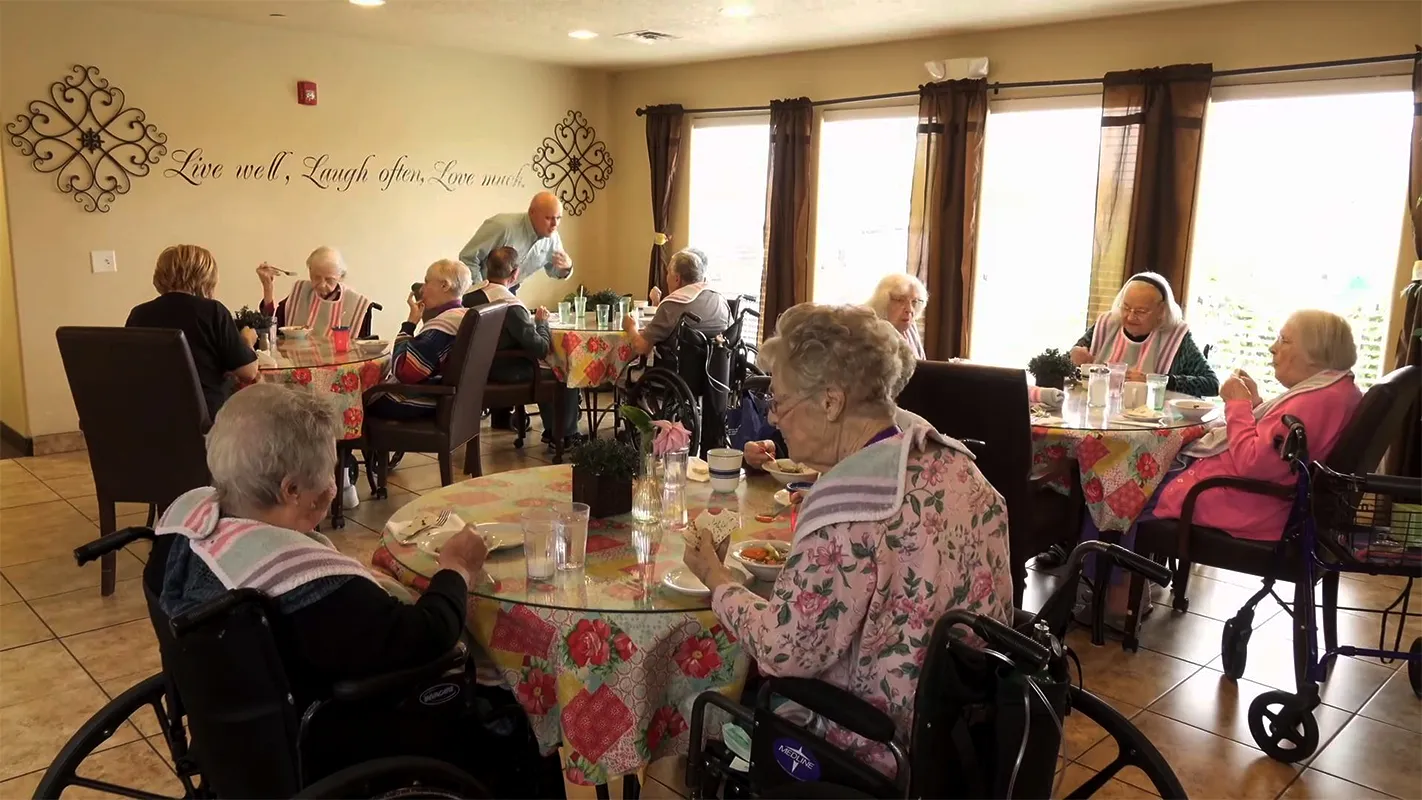
Meals feel more like family dining. Food cooks in a real kitchen. Smells drift into bed rooms and the living-room. Homeowners can see, comment, help set the table, or chop veggies if they are able. Portion sizes change delicately. Somebody who wants a smaller lunch and a more considerable evening meal can be accommodated without a long request process.
Medication management is usually centralized but noticeable. Staff may use locked cabinets in the kitchen area or a devoted med space, yet administration frequently occurs in typical areas where locals already are. This reduces the sense of "going to the nurse's station" and permits staff to watch on locals for any instant responses or side effects.
Personal care, such as toileting, bathing, and dressing, typically has more versatility. A resident who is horrified of showers might shift to sponge baths for a time, then gradually reestablish brief showers with familiar personnel. It is much easier to experiment when there is not press to move a long line of other locals through the exact same routine.
Family involvement tends to be informal and welcome. Grandchildren can curl up on the couch for a visit. Pals can share a cup of coffee in the cooking area. Animals are typically permitted, within security limits. The environment invites visitors to remain a while rather than hover in a lobby or official checking out area.
When small homes support higher needs
Many families presume that small assisted living homes are just for fairly independent senior citizens. In reality, a good number of these homes are set up to support residents who have higher care needs, sometimes close to what a nursing center might offer, depending upon state rules.
For example, I have seen small homes effectively care for:
Residents with moderate to innovative dementia who require regular cueing, mild redirection, or close guidance so they do not roam out of safe areas.
Residents who are physically frail, perhaps requiring two‑person help or mechanical lifts for transfers, in partnership with home health or hospice services.
Residents with complicated medication regimens, including insulin injections, inhalers, and numerous daily pills, managed under nurse oversight.
This greater skill care works well in small homes when 3 conditions satisfy: steady staffing, excellent external clinical assistance, and clear communication with families. Since staff see each resident so typically, changes in condition are typically observed early. A resident who strolls a bit slower, eats a little less, or appears off balance will draw quick attention.
However, small homes are not an intensive care unit. Specific medical situations still need nursing homes or health center care. Large wound care requirements, regular IV medications, or intricate medical equipment can stretch the capacity of a residential setting. That is where truthful evaluation and clear arrangements matter. A credible small home will be extremely explicit about what they can and can not safely manage, and will not hesitate to advise a higher level of care when appropriate.
Respite care: evaluating the fit without a long commitment
Respite care is a short‑term stay that provides family caretakers a break while their loved one gets expert elderly care. Lots of small assisted living homes provide respite stays keyed around a day-to-day or weekly rate, often with a minimum of a couple of days.
For caregivers who are unsure whether a small home model will match their parent, respite care offers a low‑risk trial. The resident gets to experience day-to-day routines, meet staff, and evaluate the physical environment. Households see how communication feels, how well the home manages medications and personal care, and whether the resident's state of mind changes for much better or worse.
I frequently motivate caregivers who are on the fence in between a big community and a small home to utilize respite tactically. Arrange a a couple of week remain in each kind of setting, if possible, separated by a long time at home. Take note not just to your loved one's feedback, but also to your own tension levels, just how much information you get from staff, and how easily you can reach somebody who understands what is going on day to day.
Respite care also matters when a main family caregiver faces surgical treatment, a business trip, or basic burnout. A small home can feel less confusing to a frail elder than a big building, especially if they are coming straight from a personal home. The transition from "my home" to "a house that looks like a big household's house" frequently feels less jarring.
Key benefits of small assisted living homes at a glance
Here is a succinct summary of advantages lots of families observe when picking a smaller residential home for senior care:
- More customized attention because personnel care for less residents and see them throughout the day
- Home like environment that decreases institutional feel and can alleviate anxiety or confusion
- Stronger relationships among homeowners, staff, and households, which supports trust and better interaction
- Easier tracking of subtle health or habits changes, typically catching issues earlier
- Flexible day-to-day regimens that can adapt to long-lasting routines, cultural practices, and changing abilities
Trade offs and truthful limitations
No senior care choice is ideal. Small assisted living homes bring trade‑offs that should have clear eyes.
Space and features are limited by the physical size of a house. There is rarely room for a devoted gym, theater, or multiple activity rooms. Corridors might be narrower, which can matter for residents using large devices. Outdoor gain access to typically indicates a backyard or outdoor patio instead of extensive grounds. For many elders, this cozy scale is reassuring, but anyone utilized to long indoor strolls or big group events may feel constrained.
On website medical existence is generally lighter. Larger neighborhoods often have nurse practitioners visiting regularly, on‑site therapy gyms, or collaborations with centers. Small homes rely more on visiting nurses, therapists, and doctors. That works well when coordination is strong, but can falter if communication lines break down or local providers are extended thin.
Costs differ more than many people expect. Some small homes provide extremely competitive rates relative to big neighborhoods, especially when you factor in the level of hands‑on care included. Others, particularly in high‑demand neighborhoods, can be more expensive. Due to the fact that there are fewer citizens, the cost of staffing, lease, and energies spreads out across a smaller base. It is essential to acquire an in-depth cost schedule and ask precisely what is covered and what activates added costs.
Coverage by insurance coverage and public programs may also differ. Long‑term care policies normally cover licensed assisted living regardless of size, but you must confirm home eligibility. Medicaid waivers, where offered, typically have specific agreements with specific companies. Not every small home gets involved. Families counting on public funding need to check those information early.
Lastly, not all families are comfy with the level of intimacy that small homes develop. Brother or sisters may disagree on whether a parent requires that much oversight. Some seniors prefer the privacy of a large structure where they can blend in and pick when to engage. Character, history, and household characteristics matter as much as the care design itself.
How to examine a small assisted living home
When you step into a potential home, the impression often informs you more than the tour script. Pay attention to what you feel in your body. If your shoulders drop and your breathing slows, that is data. Still, feelings take advantage of structure. Throughout visits, numerous families discover it valuable to keep a simple mental list focused on 5 areas:
- Safety and cleanliness: clear sidewalks, grab bars, smoke detectors, safe exits for homeowners with dementia, no strong odors masked by air freshener
- Staffing truth: variety of staff on responsibility, how they talk to homeowners, whether they seem rushed or present, and whether an administrator or owner is easily obtainable
- Resident experience: facial expressions, whether individuals look engaged or withdrawn, how staff respond to call bells or spoken requests
- Daily life: what is cooking in the kitchen area, whether anyone is chatting or listening to music, how flexible regimens seem, and whether personal products are visible in locals' spaces
- Communication practices: how particular personnel are when addressing questions about care, medication schedules, bathing regimens, and family updates
After the visit, compare notes among relative. Frequently one person notices the physical environment, another gets social cues, and a 3rd absolutely nos in on personnel professionalism. That composite view offers a better picture than any single perspective.
Matching the model to your household's reality
Assisted living, respite care, and wider senior care choices typically emerge from stress: a fall, a hospitalization, a caregiver reaching completion of their rope. Under pressure, it is tempting to grab the first option a discharge organizer recommends. Taking a step back to ask, "What kind of life would my parent actually prosper in?" can change the trajectory.
Small assisted living homes stand out when a person worths familiarity, calm, and close relationships, and when their care requires benefit from regular observation and versatile regimens. They suit families who wish to be included and present, but who require trustworthy partners to share the weight of elderly care. They are particularly powerful when used attentively for respite care to test fit and foster trust before a permanent move.
For some senior citizens, the busier environment and comprehensive features of a larger neighborhood align better with their character and objectives. That is not a failure of the small home model, simply a various match.
What matters most is not the size of the structure. It is whether, because place, your loved one is seen, heard, and assisted to live the fullest variation of life that their health enables. Small assisted living homes, when well run, frequently make that sort of attentive, human‑scale care simpler to provide day after day.
BeeHive Homes of Mesquite provides assisted living care
BeeHive Homes of Mesquite provides respite care services
BeeHive Homes of Mesquite supports assistance with bathing and grooming
BeeHive Homes of Mesquite offers private bedrooms with private bathrooms
BeeHive Homes of Mesquite provides medication monitoring and documentation
BeeHive Homes of Mesquite serves dietitian-approved meals
BeeHive Homes of Mesquite provides housekeeping services
BeeHive Homes of Mesquite provides laundry services
BeeHive Homes of Mesquite offers community dining and social engagement activities
BeeHive Homes of Mesquite features life enrichment activities
BeeHive Homes of Mesquite supports personal care assistance during meals and daily routines
BeeHive Homes of Mesquite promotes frequent physical and mental exercise opportunities
BeeHive Homes of Mesquite provides a home-like residential environment
BeeHive Homes of Mesquite creates customized care plans as residents’ needs change
BeeHive Homes of Mesquite assesses individual resident care needs
BeeHive Homes of Mesquite accepts private pay and long-term care insurance
BeeHive Homes of Mesquite assists qualified veterans with Aid and Attendance benefits
BeeHive Homes of Mesquite encourages meaningful resident-to-staff relationships
BeeHive Homes of Mesquite delivers compassionate, attentive senior care focused on dignity and comfort
BeeHive Homes of Mesquite has a phone number of (702) 381-6899
BeeHive Homes of Mesquite has an address of 780 2nd S St, Mesquite, NV 89027
BeeHive Homes of Mesquite has a website https://beehivehomes.com/locations/mesquite/
BeeHive Homes of Mesquite has Google Maps listing https://maps.app.goo.gl/FouNDQWSGjDorrdT7
BeeHive Homes of Mesquite has Instagram page https://www.instagram.com/beehivehomesmesquite/
BeeHive Homes of Mesquite has an TikTok page https://www.tiktok.com/@beehivehomesofmesquite
BeeHive Homes of Mesquite has an YouTube page https://www.youtube.com/@hamiltonshives4468
BeeHive Homes of Mesquite won Top Assisted Living Homes 2025
BeeHive Homes of Mesquite earned Best Customer Service Award 2024
BeeHive Homes of Mesquite placed 1st for Senior Living Communities 2025
People Also Ask about BeeHive Homes of Mesquite
What is BeeHive Homes of Mesquite Living monthly room rate?
Our base rate is $4,400/month plus a one-time community fee of $1,500. We do an assessment of each resident's needs upon move-in, so a resident's rate may be slightly higher. Based on the assessment, a resident may be in Tier I, II, or III with pricing from $4,900 to $5,300 per month. However, we do not add any "a la carte" charges after that rate is set. There are no add-ons or hidden fees
Does Medicare or Medicaid pay for a stay at Bee Hive Homes?
Medicare pays for hospital and nursing home stays, but does not pay for assisted living. Some assisted living facilities are Medicaid providers, but we are not. We do accept private pay, long-term care insurance, and we can assist qualified Veterans with approval for the Aid and Attendance program
Do we have a nurse on staff?
We do have a nurse on contract who is available as a resource to our staff but our residents' needs do not require a nurse on-site. We always have trained caregivers in the home and awake around the clock
What can you tell me about the food at Bee Hive?
You have to smell it and taste it to believe it! We use dietitian-approved meals with alternates for flexibility, and we can accommodate needs for different texture and therapeutic diets. We have found that most physicians are happy to relax diet restrictions without any negative effect on our residents
Do we have a pharmacy that fills medications?
We do have a relationship with an excellent pharmacy that is able to deliver to us and packages most medications in punch-cards, which improves storage and safety. We can work with any pharmacy you choose but do highly recommend our institutional pharmacy partner
Where is BeeHive Homes of Mesquite located?
BeeHive Homes of Mesquite is conveniently located at 780 2nd S St, Mesquite, NV 89027. You can easily find directions on Google Maps or call at (702) 381-6899 Monday thru Sunday: 8:00am to 7:00pm
How can I contact BeeHive Homes of Mesquite?
You can contact BeeHive Homes of Mesquite by phone at: (702) 381-6899, visit their website at https://beehivehomes.com/locations/mesquite/ or connect on social media via Instagram Facebook or TikTok
Gregory's Mesquite Grill offers a comfortable setting for family meals and visits with loved ones receiving Assisted living memory care senior care elderly care and respite care.